
Fall Arrest vs Fall Restraint – What’s the Difference?
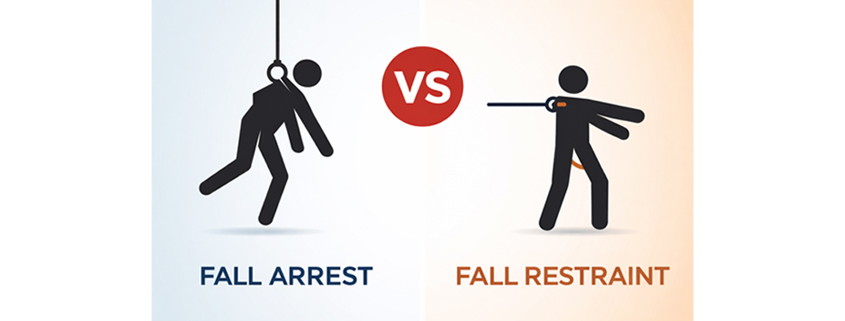
When working at height, selecting the correct safety system is critical.
Fall arrest and fall restraint are often confused — but they serve very different purposes.
Choosing the wrong system can increase risk, complicate compliance, and expose workers to unnecessary danger.
This guide explains the difference — and when each should be used.
What Is a Fall Arrest System?
A fall arrest system is designed to stop a fall after it has already occurred.
The worker is allowed to reach a fall hazard (such as an edge), but if they fall, the system activates to limit injury.
A typical fall arrest setup includes:
-
Full body harness
-
Energy absorbing lanyard or fall arrest block
-
Secure anchor point
-
Sufficient clearance below the worker
Because the fall occurs before the system engages, impact forces must be absorbed and clearance distances calculated carefully.
Fall arrest systems are commonly used where restraint is not possible due to operational requirements.
What Is a Fall Restraint System?
A fall restraint system is designed to prevent a fall from happening at all.
The worker is physically restricted from reaching a fall hazard.
Key characteristics:
-
Fixed-length lanyard
-
Secure anchor point
-
No energy absorber required
-
No fall clearance calculation needed
Where practical, restraint is often the preferred solution because it eliminates the risk of falling rather than reacting to it.
Fall Arrest vs Fall Restraint – Key Differences
| Feature | Fall Arrest | Fall Restraint |
|---|---|---|
| Purpose | Stops a fall | Prevents a fall |
| Worker can reach edge? | Yes | No |
| Energy absorber required? | Yes | No |
| Fall clearance calculation? | Required | Not required |
| Risk exposure | Higher | Lower |
Which System Is Safer?
In many cases, fall restraint is considered the safer option because it removes the possibility of falling altogether.
However, restraint is not always feasible.
Operational layout, anchor positioning, and task requirements may require a fall arrest system instead.
The correct choice depends on:
-
Work location
-
Anchor availability
-
Task movement requirements
-
Clearance distances
-
Industry regulations
Why Choosing the Correct System Matters
Incorrect specification can lead to:
-
Increased injury risk
-
Non-compliance with Working at Height Regulations
-
Site shutdowns
-
Insurance issues
-
Investigation following incidents
Height safety should always be specified correctly for the application — not simply selected from a catalogue.
Height Safety Systems Supplied by Trans-Web
Trans-Web supplies a range of height safety equipment including:
-
Full body harnesses
-
Shock absorbing lanyards
-
Restraint lanyards
-
Anchor slings and connectors
-
Fall arrest blocks
As a UK manufacturer and supplier, we support construction, logistics, hire companies and industrial operations across the UK.
If you are unsure whether fall arrest or restraint is appropriate for your application, our team can review your setup and advise accordingly.
Speak to a Height Safety Specialist
Working at height carries serious responsibility.
If you would like guidance on selecting the correct system for your operation:
👉 Discuss Your Height Safety Requirement
👉 View Our Height Safety Equipment

Leave a Reply
Want to join the discussion?Feel free to contribute!